Impian Terkubur, Kemiskinan Menyubur: Korban Putus Sekolah dan Perkawinan Anak di Jawa Timur

Bila kadung hamil, anak perempuan tak punya banyak pilihan. Ia akan putus sekolah, dan dipaksa menikah. Ia tak lagi punya kuasa penuh atas masa depan yang diidamkan. Di Jawa Timur, angka pernikahan anak masih tinggi dan justru meningkat selama pandemi.

NIA kecil begitu aktif dan gemar mengikuti berbagai kegiatan fisik di luar rutinitas belajar di sekolah.

Nia ingin jadi polisi wanita. Ia tercantol deng
‘This is my last responsibility’: Indonesia’s parents seek justice over child cough syrup deaths

The Indonesian language has words for children who have lost their mothers or fathers, but none for parents who lose their children. Some say that is because the pain is inexplicable, something 42-year-old Safitri Puspa Rani can attest to.

Safitri’s eight-year-old son Panghegar died in October 2022, one month after his birthday. Panghegar had spent weeks in a paediatric intensive care unit, fighting acute kidney injury caused by syrup medicines that had been contaminated with toxic chemicals co

The Love Stories Uncounted in Covid-19 Statistics

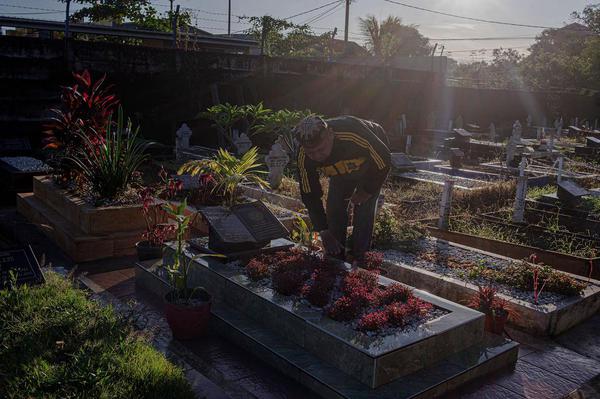
The graveyard of sorrow – that is how people refer to the Macanda public cemetery in Gowa, South Sulawesi, where 1,338 people who died of Covid-19 between 2020 and 2021 were laid to rest. One of them was a 5-day-old child who died in March 2021. Others passed away without their loved ones around, separated by the health protocols that sought to protect them.

Visiting the cemetery has become a daily routine f

Indonesia backs proposed WTO waiver to push for COVID-19 vaccine equity

Indonesia is backing a proposal by developing countries to waive patent regulations that might allow for faster and better vaccine distribution, a move that developed countries have continued to block.

India, a leading producer of generic drugs, and South Africa, which has been reportedly lagging in its vaccine rollout, lodged the proposal on Oct. 2, 2020 with the World Trade Organization (WTO).

The proposal “for the Prevention, Containment and Treatment of COVID-19” requests a waiver from sev

As cases swell in Indonesia, self-isolation is a luxury not everyone can afford

Imagine having to work with four other people who do not wear masks in a poorly ventilated room – or sneaking into the office of the boss who, unlike everyone else at the company, has been working from home since March 2020, just to be able to eat lunch alone, or else have it on a balcony with the external parts of air conditioners venting hot air outside.

These are everyday realities for a 24-year-old woman with an office job at a small construction supplies distributor in Surabaya, East Java.

Testing gap across provinces slows down COVID-19 response in Indonesia

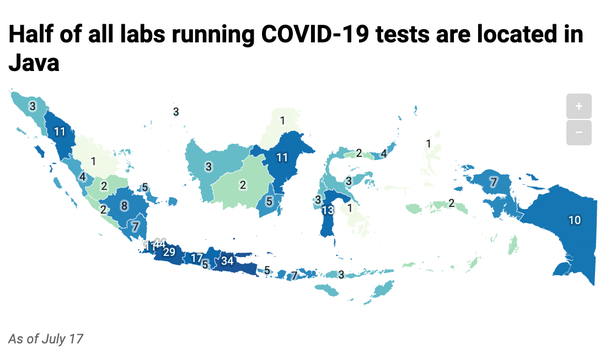
With the COVID-19 pandemic requiring an unprecedented scale of laboratory testing, Indonesia continues to face disparities in testing between regions in the vast archipelago.

The country is now operating 269 laboratories to run polymerase chain reaction (PCR) tests for diagnoses, from only 12 labs allowed by the Health Ministry in mid-March, when the country reported its first confirmed cases.

Half of these labs are located in Java, Indonesia's most populous island that is home to some 141 mil

Modified mosquitoes bring much hope in dengue-endemic Indonesia

In Indonesia, where dengue remains endemic, recent trial results suggesting that releasing mosquitoes carrying a certain bacteria could lead to a 77 percent reduction of dengue cases have brought much hope.

Researchers from the World Mosquito Program (WMP) of Australia’s Monash University, along with Indonesian partner Gadjah Mada University (UGM), have deployed Wolbachia-infected mosquitoes in Yogyakarta as part of a randomized controlled trial that started in 2017.

Wolbachia is a bacterium t

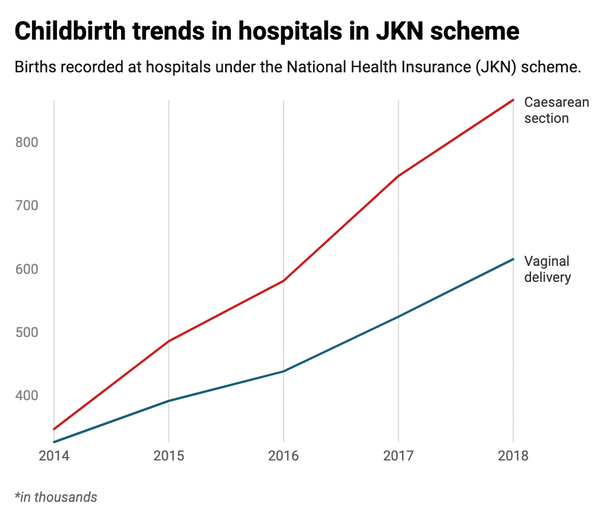
High prevalence of c-section births in Indonesia raises health, budget concerns

Despite the stigma that is often attached to it, c-section births are getting more common in Indonesia. Last year, 17.6 percent of all births were delivered through c-section, according to the Basic Health Research (Riskesdas). This represents a steady rise from 15.3 percent in 2010.

The figure is higher than the World Health Organization's (WHO) estimation that 10 to 15 percent of all births medically require a c-section. Some studies, however, suggest the ideal rate should be a little higher than that.